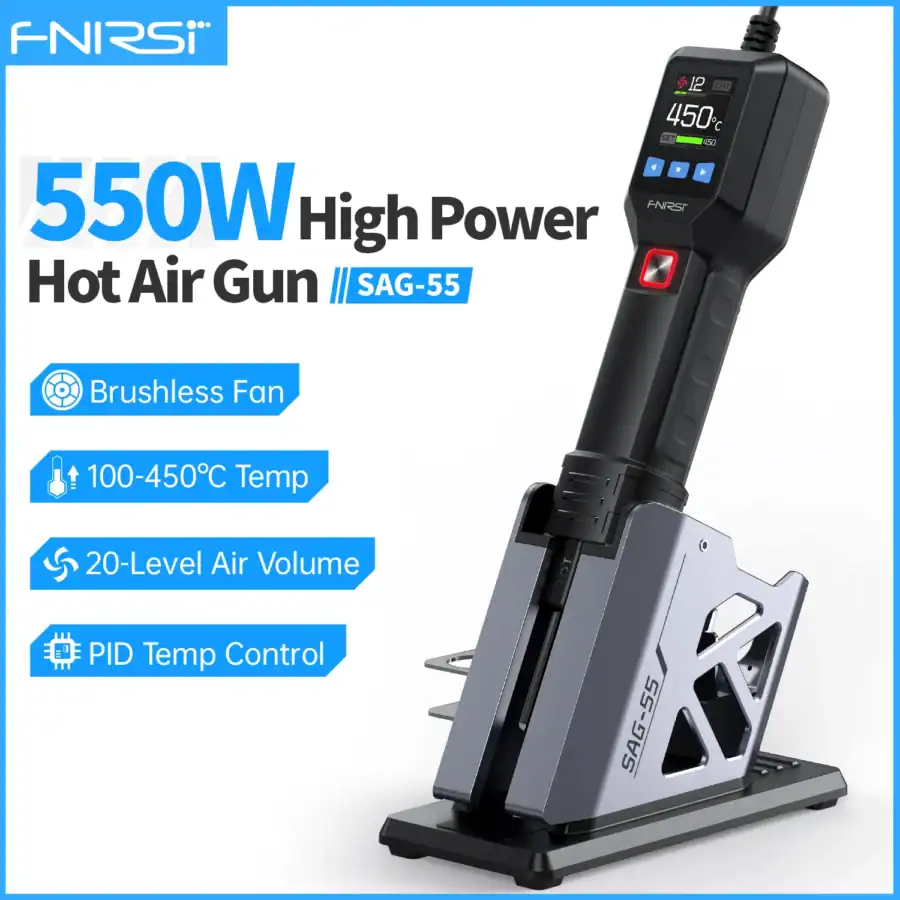
These rework tools melt solder across entire component footprints simultaneously, which standard soldering irons cannot achieve.
FNIRSI hot air stations deliver precise temperature control up to 480°C with adjustable airflow settings. Digital displays show exact temperature readings while you work. This precision matters when removing or installing sensitive components like microcontrollers, memory chips, and ball grid array packages.
Surface mount technology dominates modern electronics. Smartphones, laptops, game consoles, and virtually all consumer electronics use SMD components that require hot air for proper rework. A quality hot air station opens up repair possibilities that soldering irons alone cannot address.
How Hot Air Rework Works
The station heats air inside a ceramic or quartz element and directs it through interchangeable nozzles. Different nozzle sizes concentrate or spread the airflow to match component dimensions. Small nozzles focus heat on individual chips. Large nozzles cover entire board sections for preheating.
Temperature settings control how hot the air becomes. Higher temperatures melt solder faster but risk damaging heat-sensitive components and nearby parts. Lower temperatures require longer dwell times but offer safer rework on delicate assemblies.
Airflow settings control how much air volume reaches the board. High airflow transfers heat quickly to large components and ground planes. Low airflow prevents blowing small components off their pads during reflow.
The combination of temperature and airflow determines your thermal profile. Experienced technicians adjust both parameters to match specific components and board constructions.
Why Temperature Control Matters
Lead-free solder requires higher temperatures than traditional lead-based alloys. Most lead-free solders melt between 217°C and 227°C, but practical rework temperatures run higher to ensure complete reflow. Settings between 350°C and 400°C suit most lead-free SMD work.
Excessive heat damages components and circuit boards. Plastic connectors warp. Electrolytic capacitors fail. PCB laminate delaminates and lifts pads. Precise temperature control prevents these failures while still achieving proper solder reflow.
Temperature stability maintains consistent results throughout your work session. Quality stations hold their set point within a few degrees. Cheaper stations fluctuate widely, making reliable rework difficult.
Thermal recovery describes how quickly the station restores temperature after airflow contacts a cold board. Fast recovery maintains consistent heating even when working on large ground planes that absorb significant heat.
Who Uses Hot Air Stations?
Mobile phone repair technicians replace charging ports, audio chips, and other SMD components daily. Hot air stations are essential tools in every phone repair shop.
Game console repair specialists fix HDMI ports, power management chips, and graphics processors. These components use ball grid array packaging that only hot air can properly rework.
Laptop repair technicians replace USB ports, display connectors, and failed chipsets. Modern laptops contain hundreds of SMD components that may require rework.
Electronics hobbyists building custom projects use hot air for assembling surface mount boards. Many interesting components only come in SMD packages. Hot air enables access to these parts.
PCB assembly enthusiasts use hot air stations with solder paste for small batch production. Stencilled paste and hot air reflow produces professional results without expensive reflow ovens.
Students learning electronics repair need affordable equipment that performs consistently. Hot air technique develops through practice on scrap boards before attempting valuable repairs.
Types of Hot Air Equipment
Standalone hot air stations dedicate full functionality to rework. These units focus entirely on hot air performance with precise controls and powerful heating elements. They suit users who already own separate soldering equipment.
Combined soldering and hot air stations include both tools in one unit. These save bench space and cost less than purchasing separate equipment. The trade-off is typically reduced power or features compared to dedicated units.
Portable hot air tools offer compact rework capability for field service. Battery-powered and USB-powered options exist for locations without mains power. These suit light rework rather than heavy component replacement.
For through-hole work and fine soldering that hot air cannot address, pair your station with quality soldering irons designed for precision work.
Key Specifications to Consider
Temperature range should cover both leaded and lead-free soldering. A range from 100°C to 480°C handles virtually all rework scenarios from gentle preheating to high-temperature lead-free work.
Power output determines heating capability. Higher wattage stations heat faster and maintain temperature better when working on thermally demanding boards. Most hobbyist work suits stations between 700W and 1000W.
Airflow range affects versatility. Wide adjustment ranges let you work on tiny components with minimal airflow and large connectors with maximum output. Look for stations offering at least 20-120 litres per minute adjustment.
Nozzle selection determines which components you can target precisely. Round nozzles suit general work. Square and rectangular nozzles match specific IC packages. Check that your station includes nozzles matching your typical components.
Cool-down features protect heating elements and improve safety. Auto-cool functions run the air pump until the element reaches safe temperature. This extends element life and prevents burns when storing the handpiece.
Hot Air Accessories
Nozzle sets expand your component coverage. Standard stations include basic round nozzles. Additional square, rectangular, and specialty nozzles target specific chip packages accurately.
Preheating plates warm boards from below while hot air works from above. Preheating reduces thermal shock and makes rework easier on multilayer boards with heavy ground planes.
PCB holders position boards at comfortable working angles and hold them steady during rework. Adjustable arms accommodate various board sizes. Heat-resistant materials withstand accidental contact with hot air.
Solder paste enables component installation with hot air. Flux-containing paste holds components in position during reflow. Various alloy formulations suit leaded and lead-free requirements.
Flux improves solder flow during rework. Liquid and gel flux formulations suit different applications. Quality flux makes component removal cleaner and installation more reliable.
Pair With Other Test Equipment
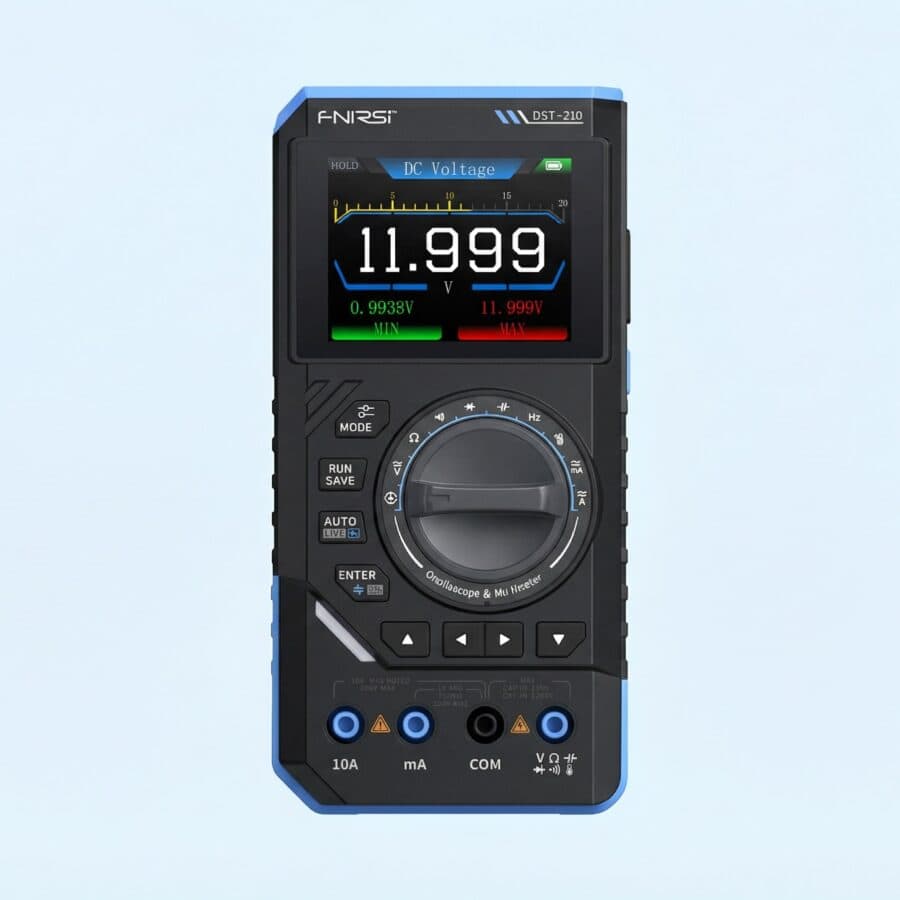
After rework, verify your repairs with proper test equipment. A digital multimeter checks continuity, measures voltages, and confirms component values.
For signal verification and troubleshooting, a handheld oscilloscope shows whether circuits function correctly after component replacement.
Component testing before installation prevents wasted effort. Browse our component testers for electronics to verify parts work correctly before soldering them to boards.
UK Delivery and Support
Orders ship from our UK warehouse within 1-2 business days. Royal Mail delivers to most UK addresses in 24-48 hours.
Every hot air station includes a 12 month guarantee and 60 day easy return period. UK consumer protection applies to every purchase, with our policies fully compliant with Distance Selling Regulations. Customer service responds within 1 business day.
Every hot air station we sell is genuine FNIRSI equipment with full manufacturer warranty coverage.
Shop now to find the hot air station that matches your rework requirements.
Frequently Asked Questions
Where can I find a budget hot air station?
FNIRSI hot air stations offer precise temperature control and adjustable airflow at accessible prices. Our range includes standalone rework stations and combined units with soldering capability. All models feature digital temperature displays and interchangeable nozzles. Orders ship from our UK warehouse with fast Royal Mail delivery, 12 month guarantee, and 60 day easy returns.
What temperature should I use for SMD rework?
Lead-free solder typically requires hot air temperatures between 350°C and 400°C for reliable reflow. Lead-based solder works at lower temperatures around 300°C to 350°C. Start at the lower end of these ranges and increase if solder does not flow properly. Keep the nozzle moving to avoid overheating any single spot. Sensitive components benefit from lower temperatures with longer dwell times.
Can I use a hot air station instead of a soldering iron?
Hot air stations and soldering irons serve different purposes. Hot air excels at surface mount work where you need to heat entire component footprints simultaneously. Soldering irons work better for through-hole components, wire connections, and precise single-joint work. Most repair technicians use both tools depending on the task. A hot air station alone limits you to SMD work, while a soldering iron alone prevents proper SMD rework.