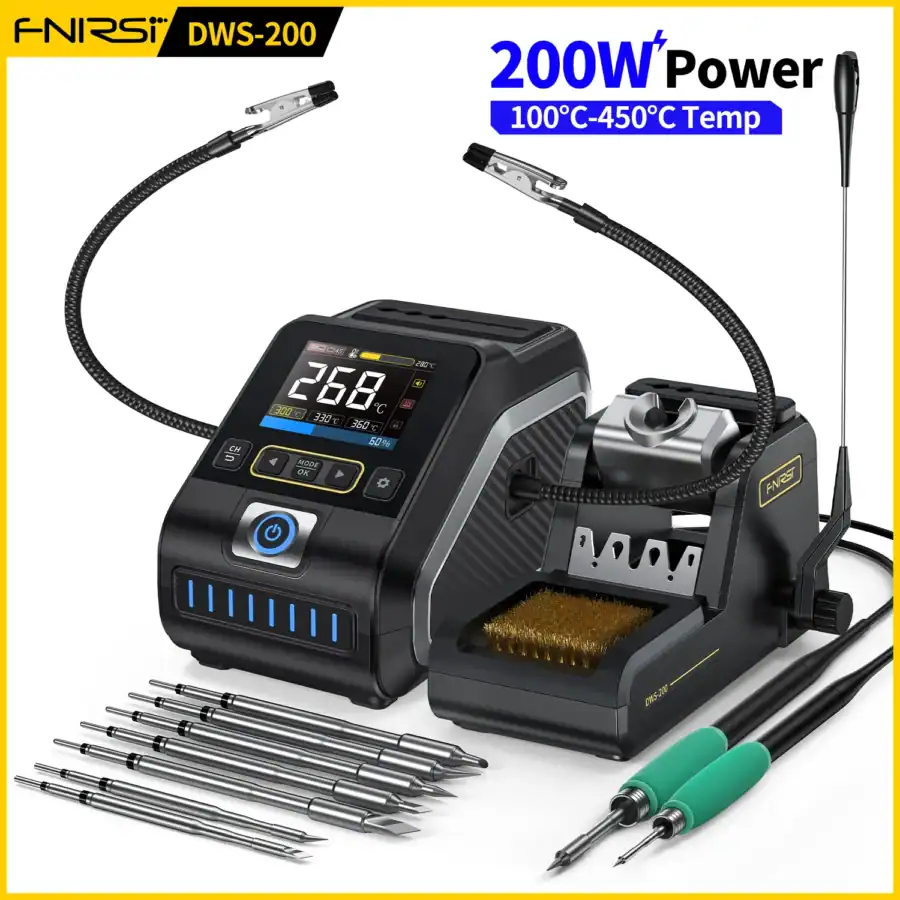
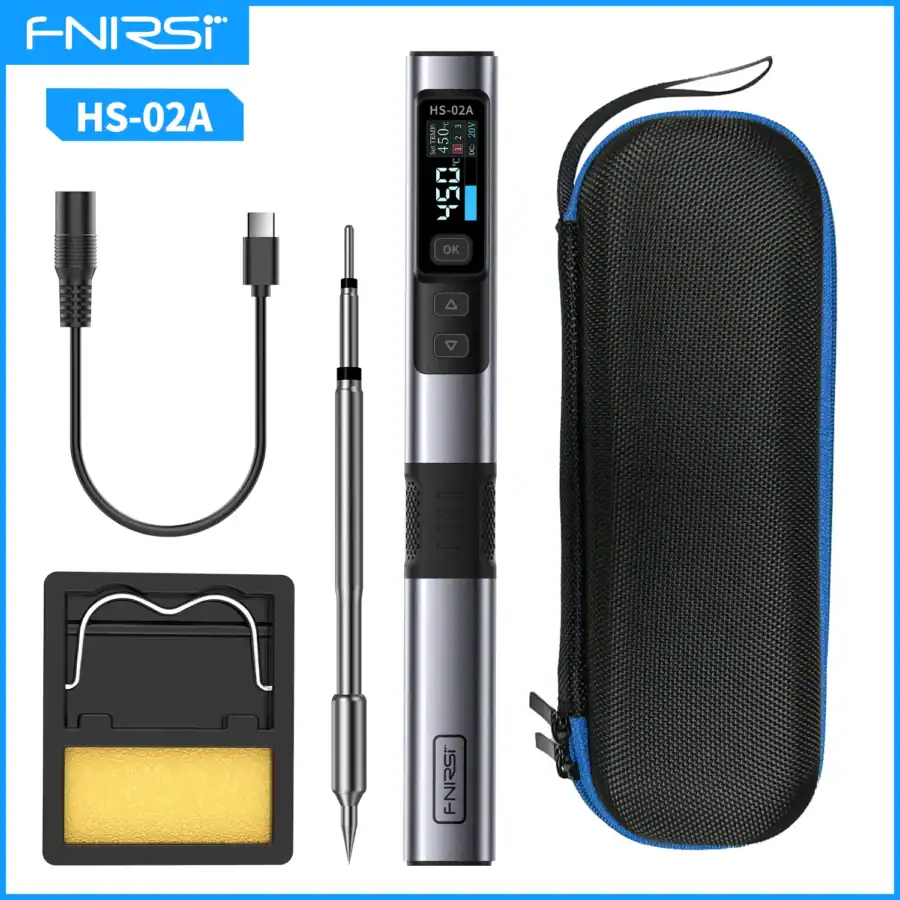
Our quality soldering irons heats quickly, maintains stable temperature, and delivers precise heat to the joint without damaging surrounding components.
FNIRSI soldering irons feature digital temperature control with accuracy within ±5°C. This precision matters when working with heat-sensitive components like semiconductors and surface mount devices. Too much heat damages parts. Too little heat creates weak joints that fail over time.
Temperature-controlled stations display the exact tip temperature on built-in screens. You set your target temperature and the station maintains it automatically, compensating for heat loss during soldering.
Why Temperature Control Matters
Different soldering tasks require different temperatures. Lead-based solder melts around 183°C. Lead-free solder requires higher temperatures between 217°C and 227°C. Sensitive components need lower temperatures to prevent thermal damage.
Fixed-temperature irons run at a single preset level. This limits their usefulness across different projects. A temperature-controlled station adapts to whatever work you need to complete.
Thermal recovery describes how quickly an iron returns to set temperature after touching a cold joint. Quality stations recover within seconds. Poor irons take much longer, slowing your work and risking cold joints.
Fast heat-up times reduce waiting. FNIRSI soldering stations reach working temperature in seconds rather than minutes. This makes them practical for quick repairs where you need to solder one or two joints and move on.
Who Uses Soldering Irons?
Electronics hobbyists building Arduino and Raspberry Pi projects solder header pins, wires, and through-hole components. A reliable iron makes assembly faster and produces stronger connections.
Students learning electronics need affordable equipment that performs consistently. Soldering technique develops through practice, and a temperature-controlled station provides predictable results while skills improve.
Repair technicians fix smartphones, laptops, game consoles, and household electronics. Portable soldering irons fit in tool kits for on-site work. Bench stations suit workshop repairs requiring extended soldering sessions.
Audio enthusiasts build and modify guitar pedals, amplifiers, and synthesizers. Clean solder joints prevent noise and ensure reliable signal paths through audio circuits.
DIY makers construct custom keyboards, LED installations, and electronic art projects. These applications demand precise soldering across hundreds of identical joints.
Types of Soldering Equipment
Soldering stations combine a base unit with a separate iron connected by cable. The base contains temperature controls, display, and power supply. This design keeps weight off the iron, reducing hand fatigue during long sessions.
Portable soldering irons operate from USB power or internal batteries. These suit field repairs and locations without mains power. FNIRSI portable irons deliver enough power for most through-hole and light surface mount work.
Soldering iron tips come in various shapes for different applications. Chisel tips transfer heat efficiently to larger joints. Conical tips reach tight spaces between components. Replacing tips extends the life of your station and adapts it to new tasks.
For surface mount rework requiring component removal, consider pairing your soldering iron with a hot air station. Hot air reflows entire component footprints simultaneously, which through-hole irons cannot achieve.
Key Specifications to Consider
Power output determines how much heat the iron can deliver. Higher wattage does not mean higher temperature. It means faster heat-up and better thermal recovery when soldering large joints or ground planes that absorb heat quickly.
Temperature range should cover both lead-based and lead-free soldering. A range from 200°C to 450°C handles virtually all electronics work. Some stations extend to 480°C for specialty applications.
Tip compatibility affects long-term cost and versatility. Stations using common tip formats offer more choices at lower prices. Check that replacement tips are readily available before purchasing.
ESD protection prevents static discharge damage to sensitive components. Quality stations include grounded tips and proper earthing to protect semiconductors during soldering.
Soldering Iron Accessories
Solder wire comes in various diameters and alloy compositions. Thinner solder suits fine surface mount work. Thicker solder speeds through-hole assembly. Lead-free formulations comply with RoHS requirements.
Flux improves solder flow and joint quality. Flux removes oxidation from surfaces, allowing solder to wet properly. Many solder wires contain flux cores, but additional flux helps difficult joints.
Tip cleaners remove oxidation and contamination from iron tips. Brass wool cleaners work without thermal shock. Wet sponges clean effectively but cool the tip temporarily.
Helping hands and PCB holders position work pieces at comfortable angles. These reduce hand strain and improve joint access during assembly.
Pair With Other Test Equipment
After soldering, verify your work with proper test equipment. A digital multimeter checks continuity across solder joints and measures component values.
When debugging circuits after assembly, a handheld oscilloscope shows signal behaviour at each stage. This helps locate faults caused by poor joints or damaged components.
For component testing before installation, browse our component testers for electronics to verify parts are working correctly.
UK Delivery and Support
Orders ship from our UK warehouse within 1-2 business days. Royal Mail delivers to most UK addresses in 24-48 hours.
UK consumer protection applies to every purchase. Our 30-day return policy complies with Distance Selling Regulations. Customer service responds within 1 business day.
Every soldering iron we sell is genuine FNIRSI equipment with full manufacturer warranty coverage.
Shop now to find the soldering iron that matches your electronics work.
Frequently Asked Questions
Where can I find a budget soldering iron?
FNIRSI soldering stations deliver temperature-controlled performance at accessible prices. Our range includes portable USB-powered irons for field work and bench stations for workshop use. All models feature digital temperature display and fast heat-up times. Orders ship from our UK warehouse with fast Royal Mail delivery.
What temperature should I use for soldering electronics?
Lead-based solder typically works well between 300°C and 350°C. Lead-free solder requires slightly higher temperatures around 350°C to 380°C. Start at the lower end and increase if solder does not flow smoothly. Sensitive components benefit from the lowest effective temperature to prevent heat damage.
How long do soldering iron tips last?
Tip lifespan depends on usage, temperature, and maintenance. Regular cleaning with brass wool and proper tinning extends tip life significantly. Most hobbyists replace tips every few months to a year. Professional users working daily may replace tips more frequently. FNIRSI stations use standard tip formats with affordable replacements readily available.