These essential test instruments display readings on numeric screens, replacing the analogue needle movements of older meters with precise digital values.
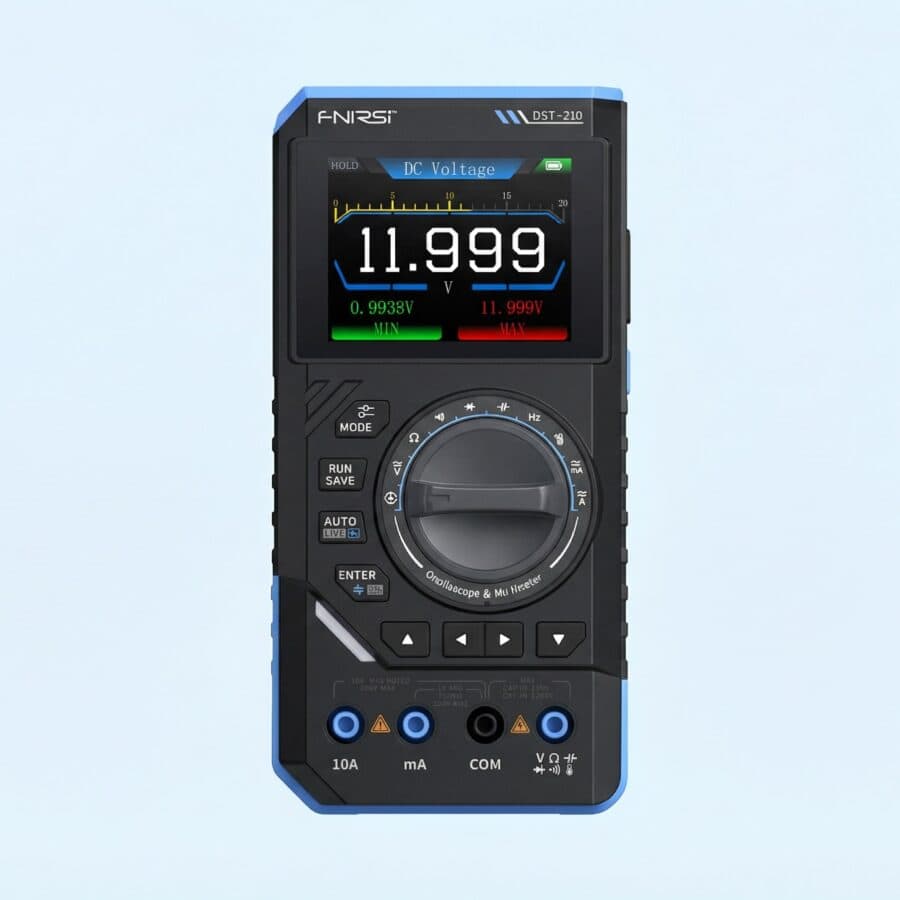
FNIRSI digital multimeters feature high count displays up to 60,000 counts for fine measurement resolution. True RMS measurement ensures accurate readings on non-sinusoidal waveforms common in modern electronics. Auto-ranging simplifies operation by selecting the correct measurement range automatically.
Every electronics workbench needs a reliable multimeter. From checking battery voltage to diagnosing complex circuit faults, multimeters handle the fundamental measurements that other instruments cannot replace.
How Digital Multimeters Work
The meter routes input signals through precision resistor networks that scale voltages to measurable levels. An analogue-to-digital converter samples the scaled signal and converts it to digital values. The microprocessor calculates the final reading and drives the display.
For current measurement, the meter measures voltage drop across an internal shunt resistor. Ohm’s law converts this voltage to current. Different shunt values handle different current ranges from microamps to tens of amps.
Resistance measurement works by passing a known current through the unknown resistance and measuring the resulting voltage drop. Again, Ohm’s law provides the resistance value from voltage and current.
True RMS meters calculate the root mean square value of AC signals mathematically. This gives accurate readings regardless of waveform shape. Non-True RMS meters assume pure sine waves and give incorrect readings on distorted waveforms from switch-mode power supplies and motor drives.
Why Display Count Matters
Display count indicates the maximum number a multimeter can show before switching to a higher range. A 6000-count meter displays up to 5999 before ranging up. A 60,000-count meter displays up to 59,999.
Higher counts provide finer resolution on each range. A 6000-count meter measuring 5V shows 5.000V with 1mV resolution. A 60,000-count meter shows 5.0000V with 0.1mV resolution on the same measurement.
For most hobbyist and repair work, 6000 counts provides adequate resolution. Professional applications measuring small changes or tight tolerances benefit from higher count displays.
Count rating also affects displayed digits. A 6000-count meter shows 3¾ digits. A 60,000-count meter shows 4¾ digits. More digits mean more precise readings within each measurement range.
Who Uses Digital Multimeters?
Electronics hobbyists verify component values, check supply voltages, and trace circuit connections. A multimeter confirms that resistors match marked values and capacitors hold charge properly.
Students learning electronics develop fundamental measurement skills. Understanding voltage, current, and resistance relationships builds the foundation for all electronics knowledge.
Repair technicians diagnose faults in appliances, consumer electronics, and industrial equipment. Multimeters quickly identify blown fuses, failed components, and wiring problems.
Electricians test mains wiring, verify circuit breaker operation, and ensure safe installations. Multimeters rated for CAT III or CAT IV provide protection when measuring mains voltages.
Automotive technicians measure battery voltage, test sensors, and diagnose charging system problems. Automotive multimeters include specific functions for ignition timing and injector pulse measurement.
HVAC technicians measure thermocouple outputs, test capacitors, and verify motor windings. Temperature measurement functions suit heating and cooling system diagnostics.
Types of Digital Multimeters
Handheld multimeters offer portable measurement for bench and field use. Compact designs fit in tool kits and pockets. Battery power enables measurement anywhere. Browse our handheld multimeters for portable options.
Bench multimeters provide higher accuracy and additional features for permanent workshop installation. Larger displays improve readability. Mains power eliminates battery concerns during extended testing sessions.
Clamp meters measure current without breaking the circuit. Jaw-style sensors clamp around conductors and sense magnetic fields from current flow. These suit measuring mains wiring and high-current circuits safely.
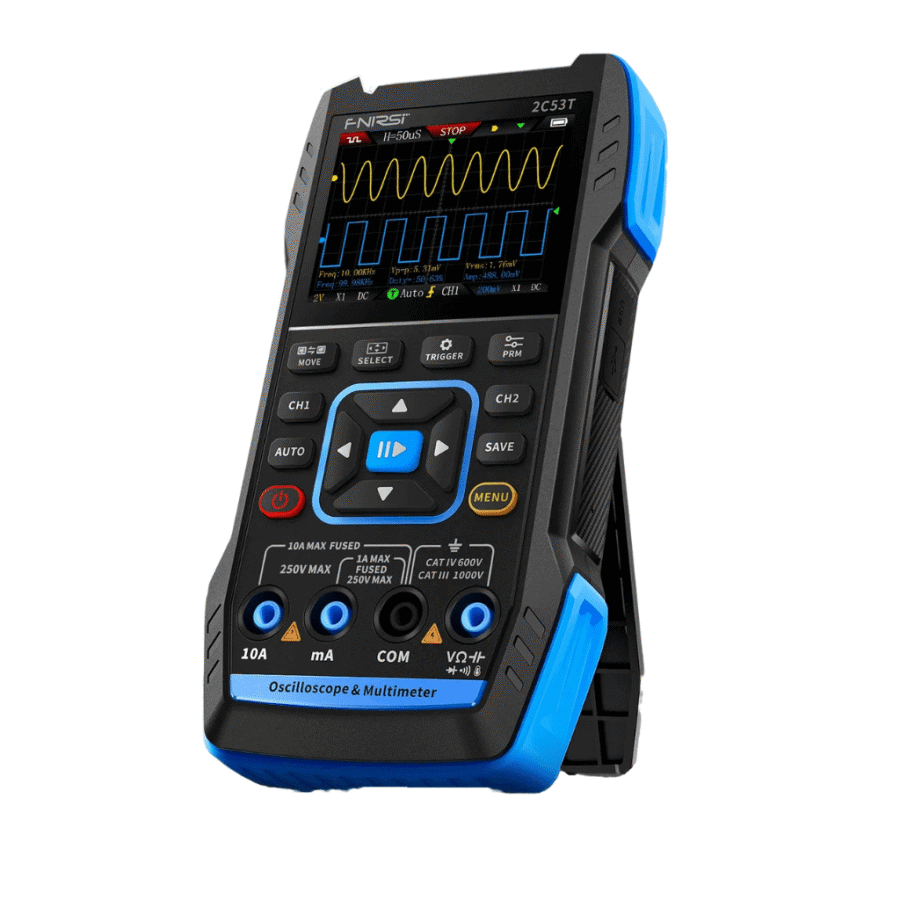
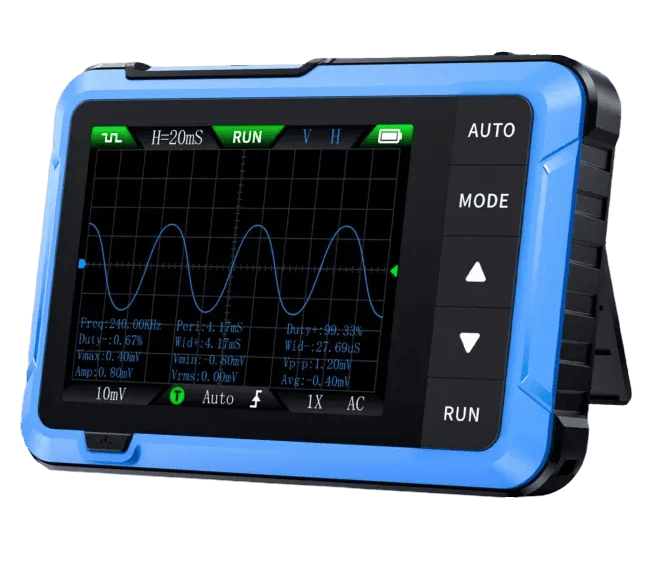
Multimeter oscilloscope combinations add waveform display to standard multimeter functions. These hybrid instruments show signal shape alongside numeric measurements. Explore our handheld oscilloscope multimeters for combined functionality.
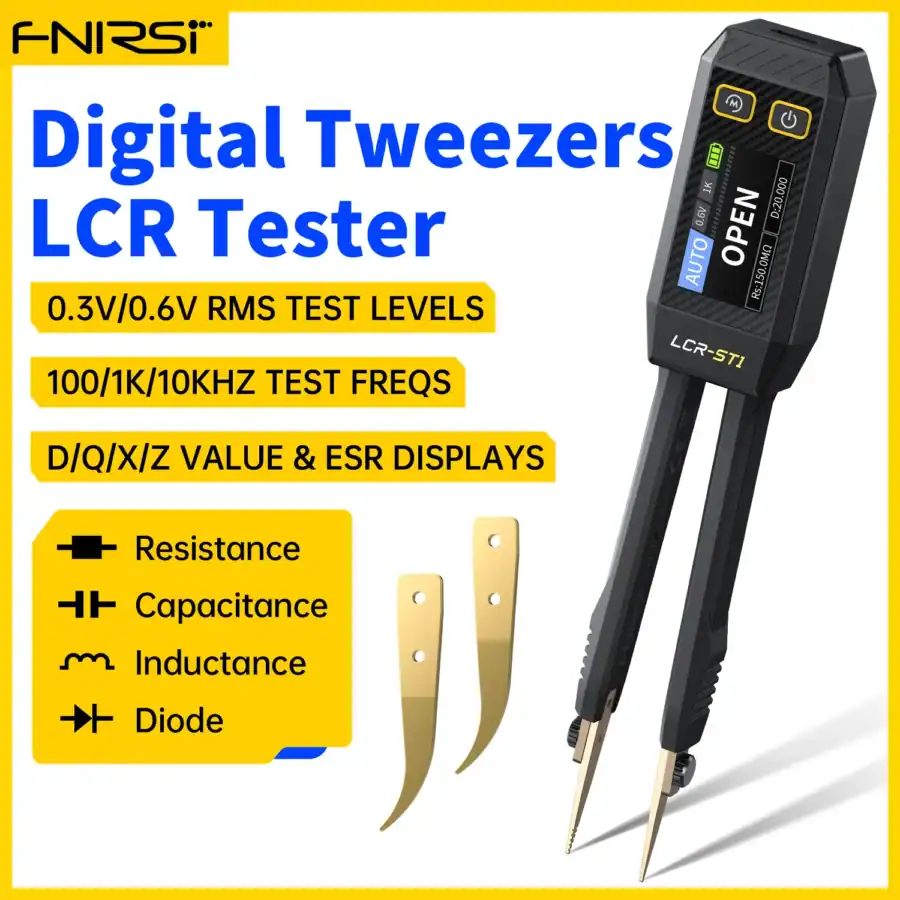
Speciality meters focus on specific applications. LCR meters measure inductance, capacitance, and resistance with high precision. ESR meters test electrolytic capacitors for internal resistance. Insulation testers verify high-resistance isolation in wiring and motors.
Key Specifications to Consider
DC voltage accuracy indicates measurement precision. Typical handheld meters achieve ±0.5% accuracy. Higher accuracy suits calibration and precision work. Most hobbyist applications tolerate ±1% accuracy without problems.
AC voltage bandwidth determines the highest frequency AC signals the meter measures accurately. Basic meters work up to a few hundred hertz. True RMS meters with wider bandwidth measure accurately up to tens of kilohertz.
Current ranges must cover your measurement needs. Most meters measure milliamps and amps through separate inputs. High current ranges typically limit measurement duration to prevent overheating.
Resistance ranges should span your expected measurements. Ranges from fractions of an ohm to tens of megohms cover most electronics work. Continuity mode beeps for low resistance, speeding connection testing.
Safety ratings matter for mains voltage work. CAT II suits household appliances. CAT III covers distribution wiring. CAT IV handles utility connections. Higher categories provide better protection against voltage transients.
Additional functions extend usefulness. Capacitance measurement tests capacitors directly. Frequency counting measures signal frequencies. Temperature measurement via thermocouple suits HVAC and process work. Diode testing verifies semiconductor junctions.
Measurement Techniques
Voltage measurement connects the meter in parallel with the circuit. Set the meter to DC or AC voltage mode as appropriate. Touch probes to the measurement points. The meter displays voltage between the probe tips.
Current measurement requires breaking the circuit and inserting the meter in series. Current flows through the meter, which measures and displays the value. Use the correct input terminals for your expected current range.
Resistance measurement requires power off in the circuit under test. Active circuits give false readings. Connect probes across the component or connection being measured. The meter supplies test current and calculates resistance.
Continuity testing quickly checks connections. The meter beeps when resistance falls below a threshold, indicating a solid connection. This speeds tracing wires and verifying solder joints without watching the display.
Pair With Other Test Equipment
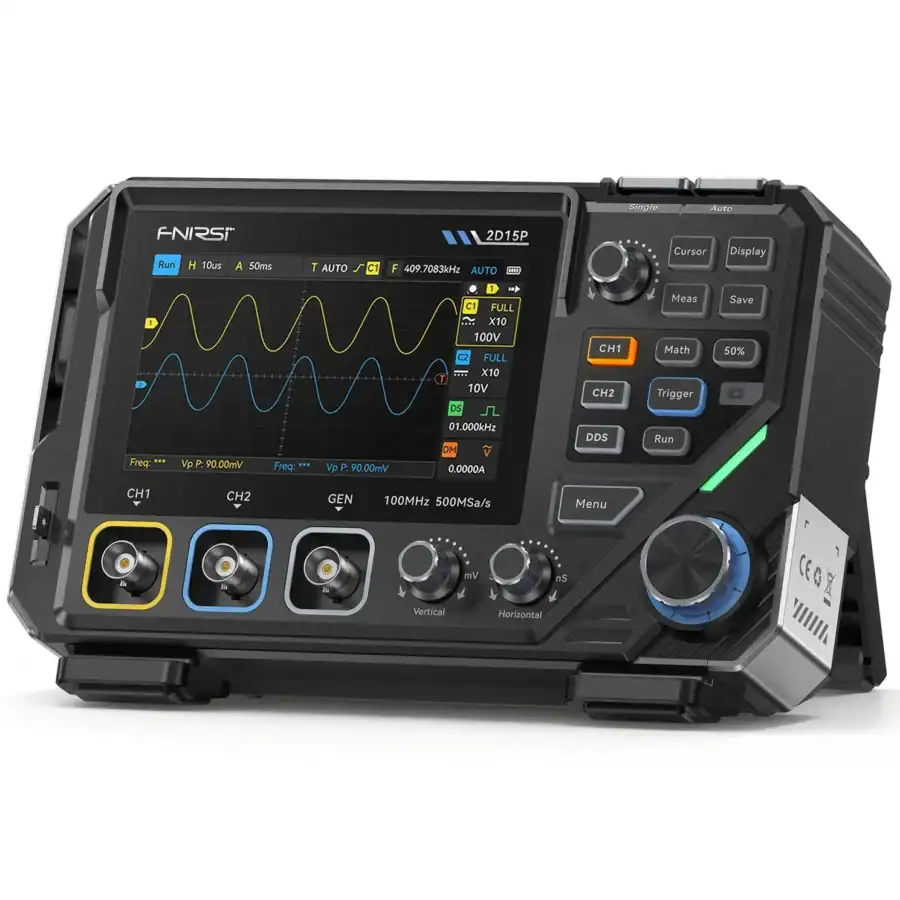
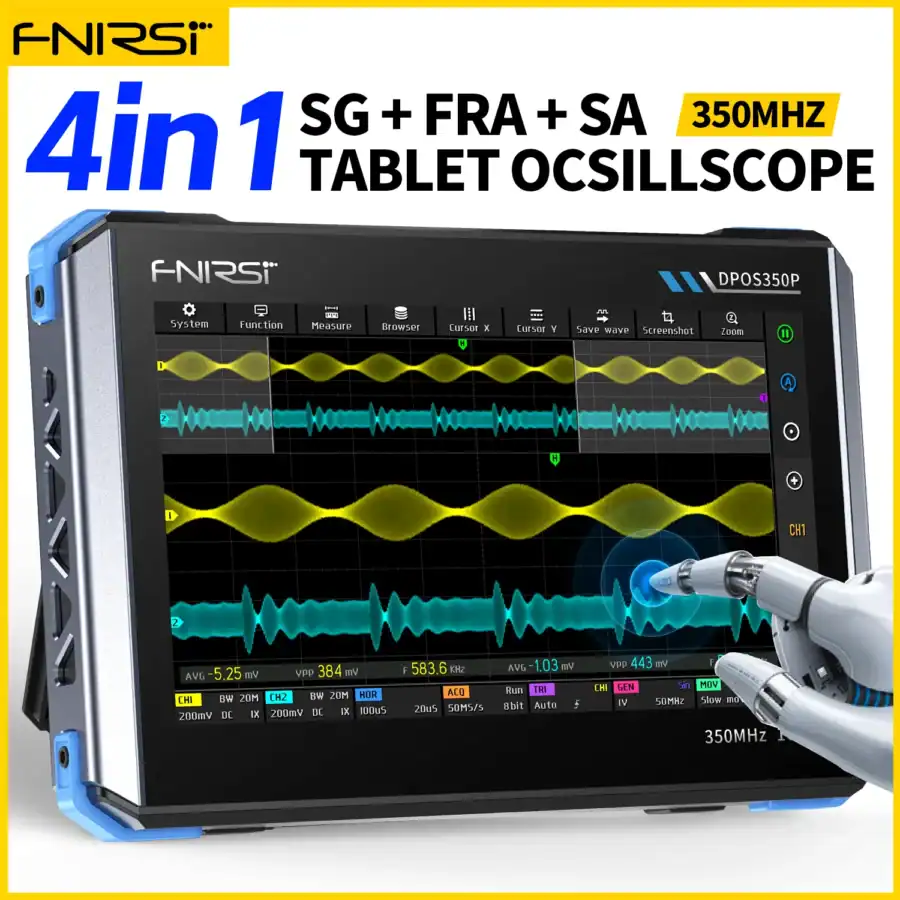
Multimeters measure static values while oscilloscopes show dynamic behaviour. A digital oscilloscope reveals signal waveforms, timing, and transients that multimeters cannot capture.
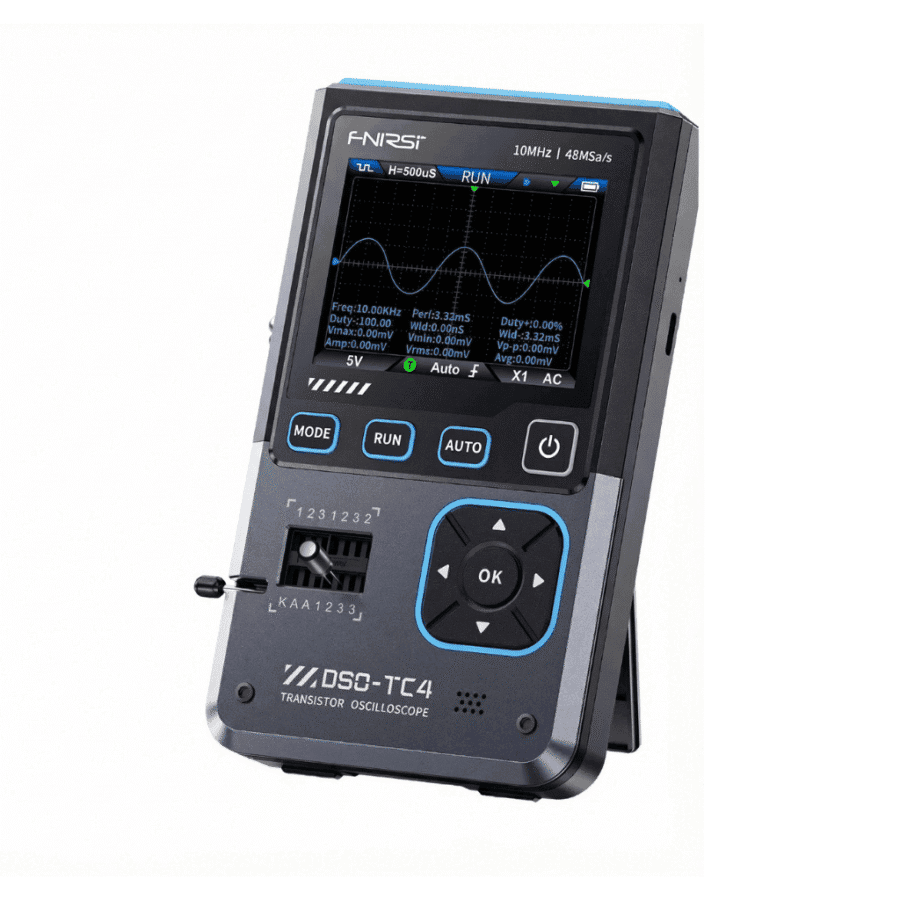
For component testing beyond basic resistance measurement, component testers for electronics identify transistors, measure capacitor ESR, and test diodes comprehensively.
Circuit development benefits from adjustable power sources. Bench power supplies provide controlled voltage and current for testing and powering projects.
Signal injection helps trace faults through circuits. Handheld signal generators produce test waveforms for stimulus-response measurements.
UK Delivery and Support
Orders ship from our UK warehouse within 1-2 business days. Royal Mail delivers to most UK addresses in 24-48 hours.
Every digital multimeter includes a 12-month guarantee and 60-day easy return period. UK consumer protection applies to every purchase, with our policies fully compliant with Distance Selling Regulations. Customer service responds within 1 business day.
Every multimeter we sell is genuine FNIRSI equipment with full manufacturer warranty coverage.
Shop now to find the digital multimeter that matches your measurement requirements.
Frequently Asked Questions
Where can I find a budget digital multimeter?
FNIRSI digital multimeters offer reliable measurement capability at accessible prices. Our range includes basic meters for beginners through high-count True RMS models for demanding applications. Features include auto-ranging, continuity testing, capacitance measurement, and backlit displays. All models ship from our UK warehouse with fast Royal Mail delivery, 12-month guarantee, and 60-day easy returns.
What does True RMS mean on a multimeter?
True RMS calculates the actual root mean square value of AC signals regardless of waveform shape. Standard meters assume pure sine waves and give incorrect readings on distorted waveforms. Modern electronics contain switch-mode power supplies and variable speed drives that produce non-sinusoidal currents. True RMS meters measure these accurately while standard meters can show errors of 20% or more on distorted waveforms.
How many counts do I need in a multimeter?
For most hobbyist and repair work, a 6000-count multimeter provides adequate resolution. This shows readings like 5.999V with 1mV resolution. Higher count meters like 60,000 counts show finer resolution such as 5.9999V with 0.1mV precision. Choose higher counts if you measure small voltage differences, verify tight tolerances, or work on precision electronics. Basic troubleshooting and component testing rarely need more than 6000 counts.