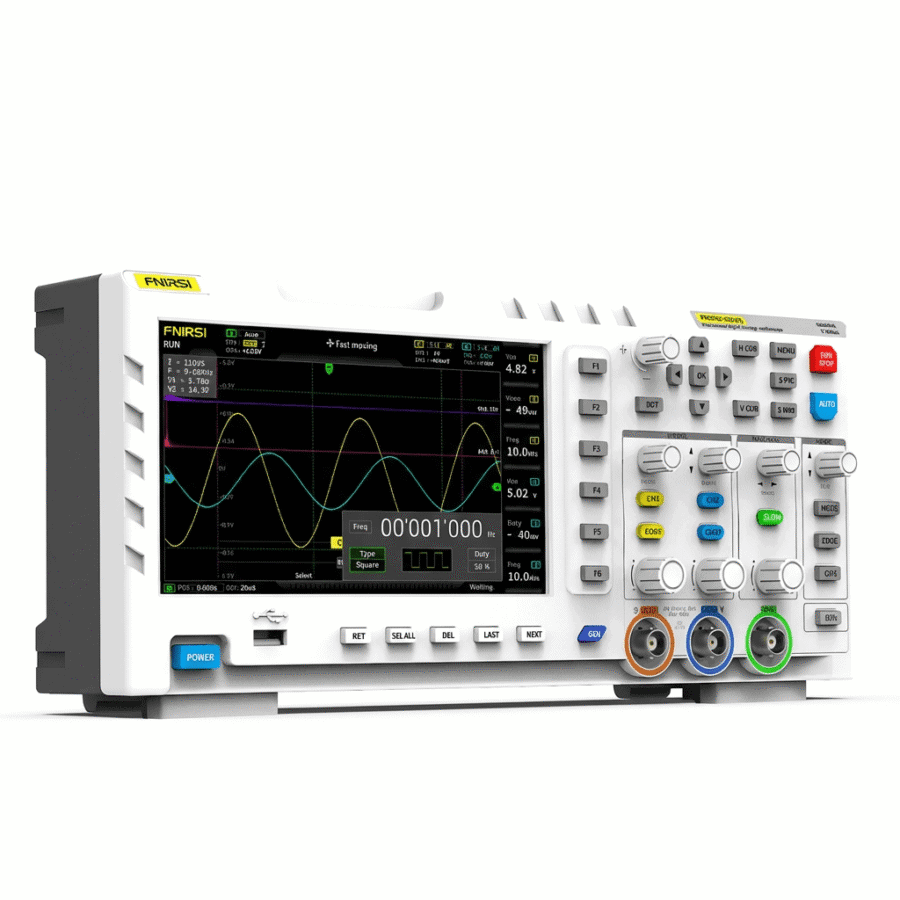
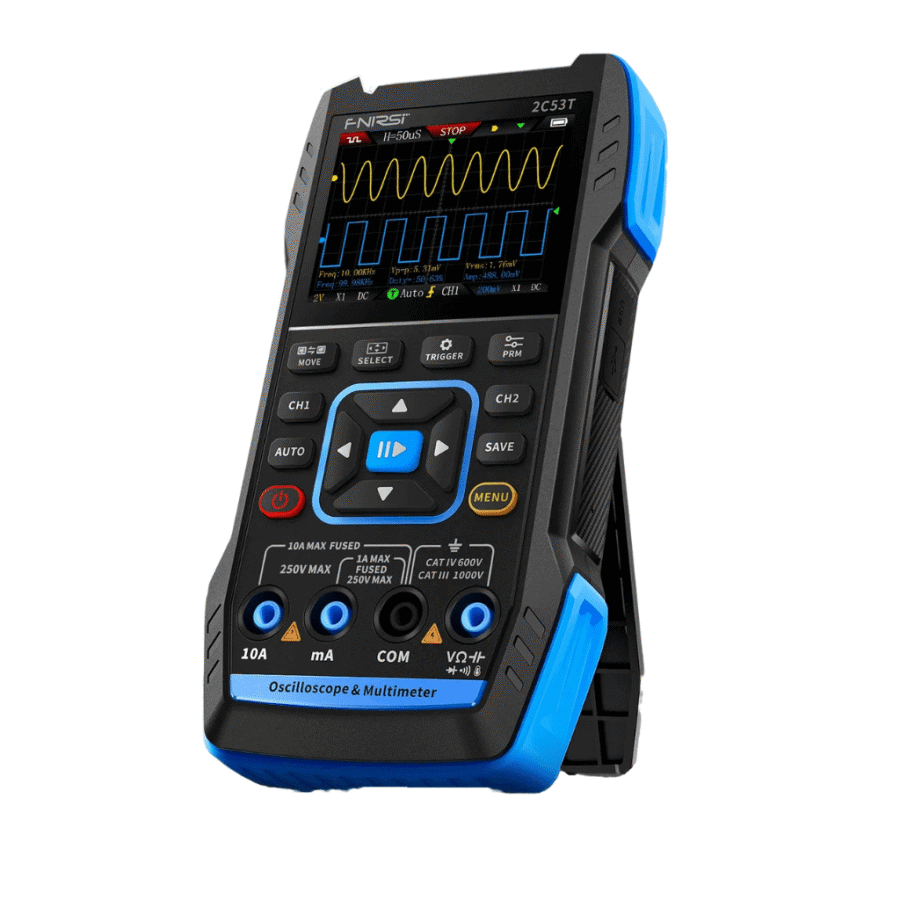
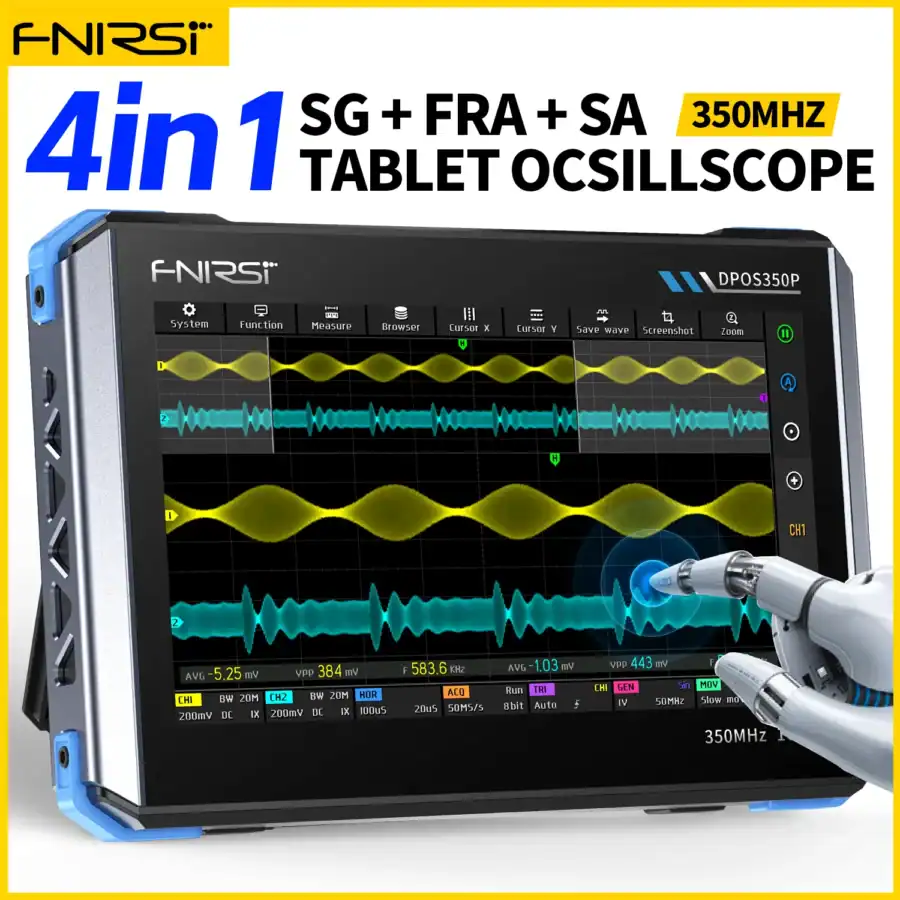
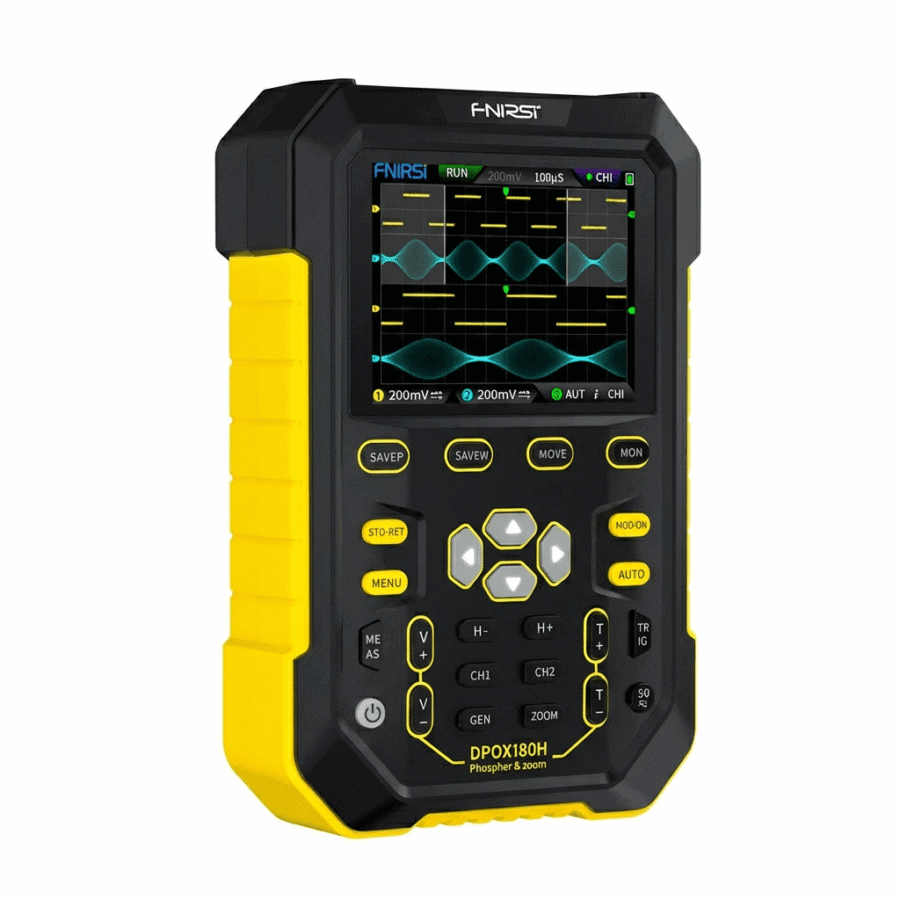
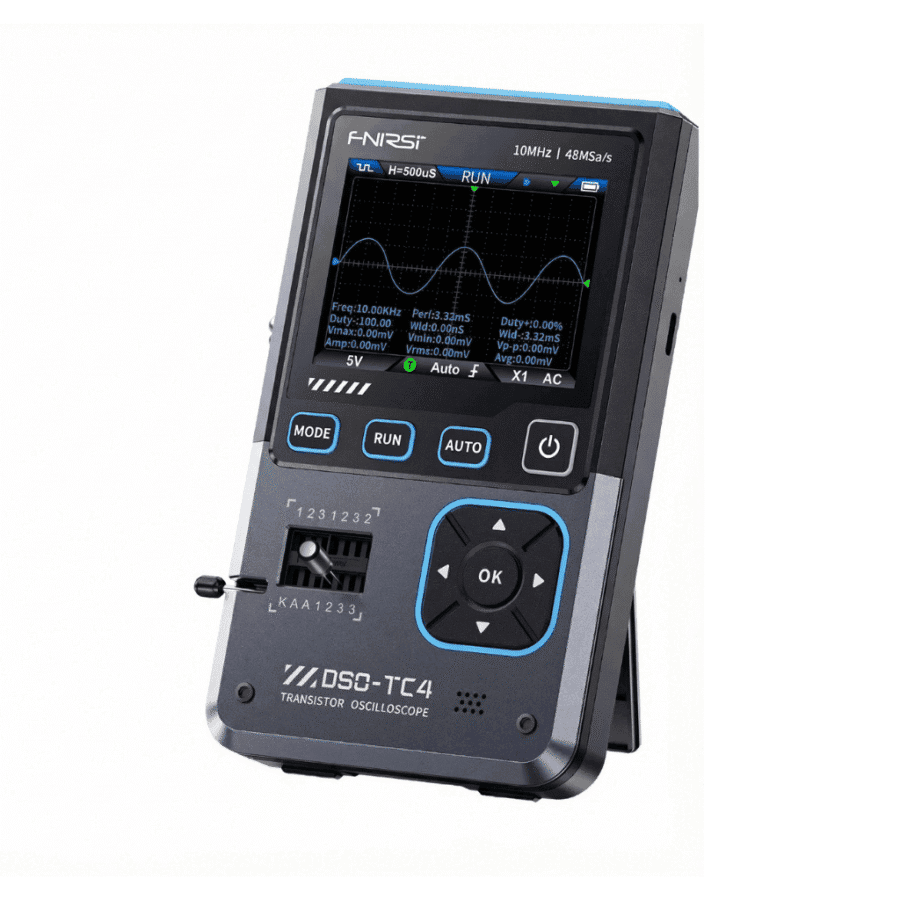
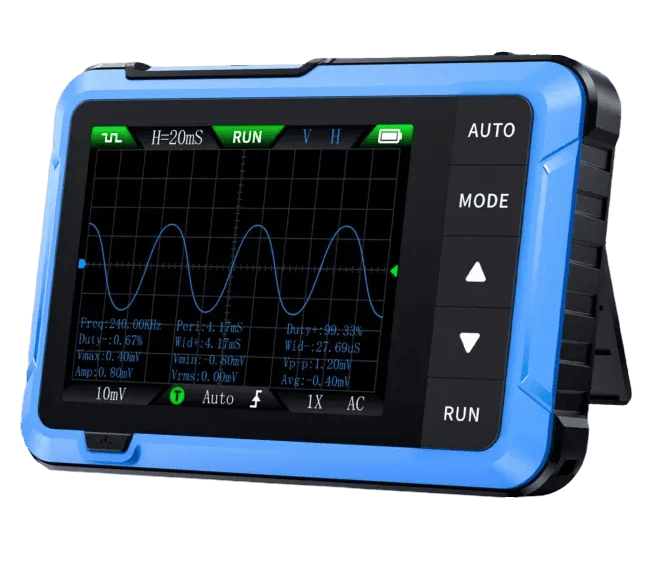
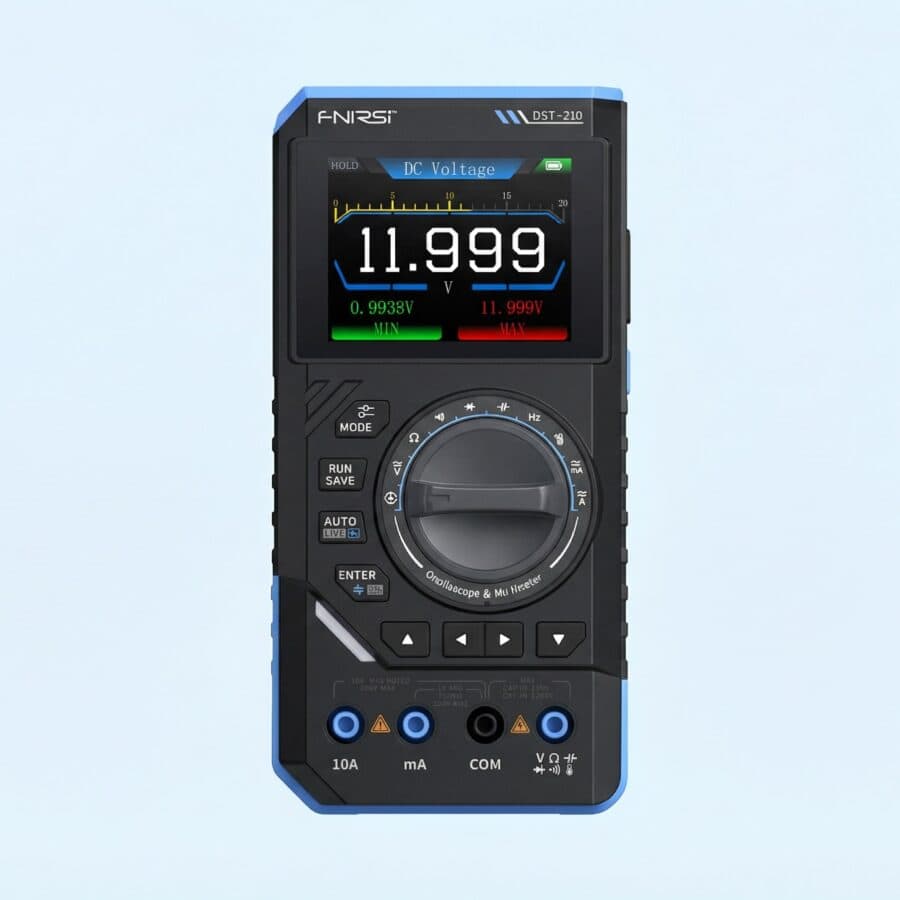
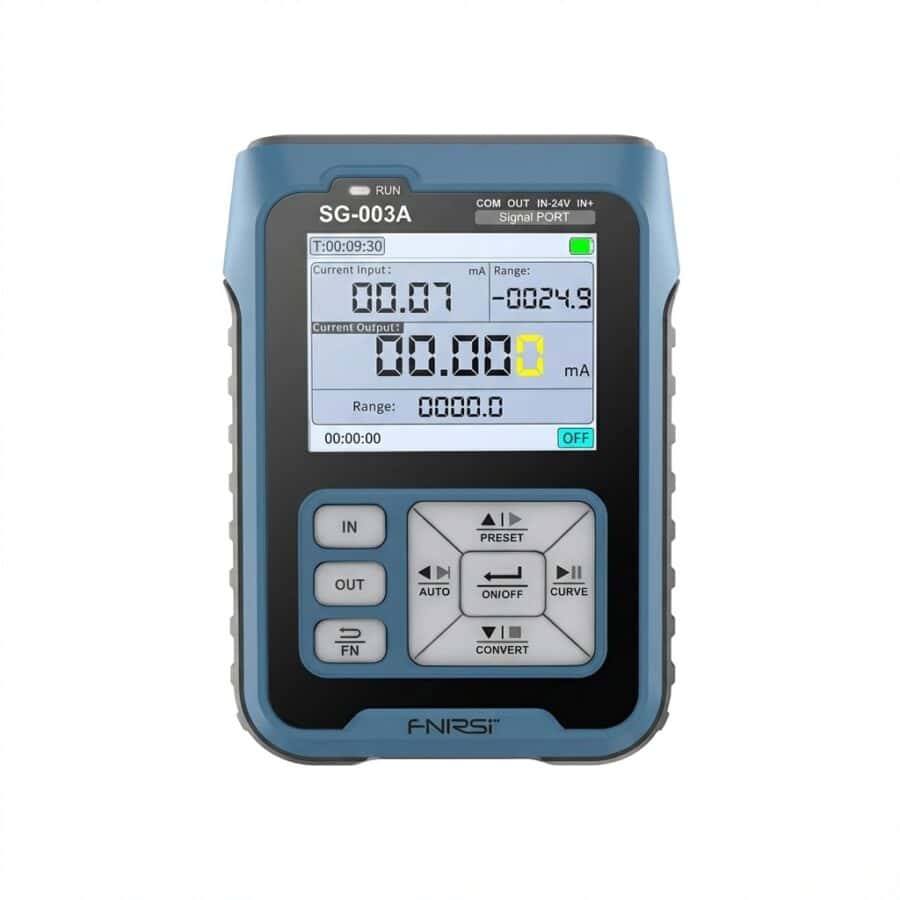
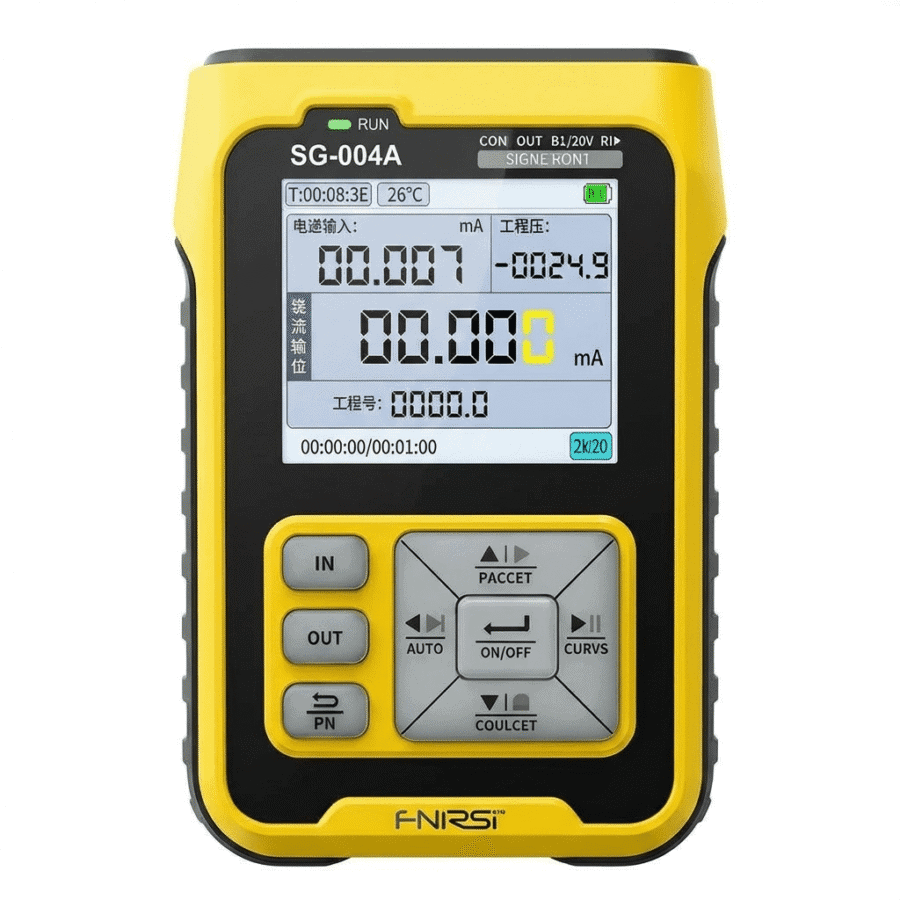
Handheld signal generators produce electronic waveforms in portable form factors.
These compact instruments output sine waves, square waves, triangle waves, and other signals for testing amplifiers, filters, and signal processing circuits wherever you need to work.
FNIRSI handheld signal generators deliver frequency ranges from fractions of a hertz to megahertz outputs. Adjustable amplitude controls match output levels to circuit requirements. Battery power and pocket-sized designs enable waveform generation at field locations, customer sites, and anywhere away from the workbench.
Portable signal generation opens testing possibilities that fixed equipment cannot address. Inject test signals at the point of measurement rather than routing cables back to bench instruments.
How Signal Generators Work
Direct digital synthesis creates precise waveforms from stored mathematical representations. A digital-to-analogue converter transforms numerical values into voltage outputs. This approach provides accurate frequency control and multiple waveform types from a single circuit.
Output amplifiers scale signals to useful voltage levels. Amplitude controls adjust output from millivolts to several volts depending on model capability. Output impedance, typically 50 ohms, matches standard test equipment conventions.
Frequency controls select output rate from sub-hertz for slow mechanical testing through megahertz for RF and high-speed digital applications. Fine adjustment enables precise frequency setting for resonance testing and filter characterisation.
Waveform selection switches between sine, square, triangle, sawtooth, and pulse outputs. Some models include arbitrary waveform capability for custom user-defined shapes. Each waveform type suits different testing applications.
Why Portable Signal Generation Matters
Field service requires test signals at equipment locations. Injecting signals into installed systems diagnoses faults without removing equipment for bench testing. A handheld signal generator fits the service toolkit for on-site troubleshooting.
Space constraints limit bench equipment in some work environments. Mobile repair setups, temporary workstations, and compact workshops benefit from instruments that store in drawers between uses.
Education benefits from portable demonstration capability. Show students how circuits respond to different waveforms anywhere with a screen or whiteboard. Signal generators that travel to classrooms enable demonstrations beyond fixed laboratory settings.
Cost efficiency comes from reduced equipment investment. A handheld signal generator provides essential waveform output without the expense of full bench function generators. Budget-conscious users access proper testing capability at accessible prices.
Complementary use alongside existing equipment extends capability. Add portable signal generation to your handheld oscilloscope and multimeter for complete field measurement and testing capability.
Who Uses Handheld Signal Generators?
Field service technicians inject signals to trace faults in installed equipment. When customer systems fail, signal injection locates where signal paths break. Portable generators enable this testing at any location.
Electronics hobbyists test amplifiers, filters, and audio projects. Verify frequency response, check gain at different frequencies, and confirm circuits perform as designed. Handheld generators suit home workshop testing alongside portable oscilloscopes.
Repair technicians diagnose faults in consumer electronics and appliances. Signal injection through circuit stages identifies failing components. Portable generators reach into equipment housings where bench instruments cannot easily connect.
Audio enthusiasts test amplifiers, speakers, and signal chains. Generate test tones for frequency response measurement. Verify crossover performance in speaker systems. Check preamplifier and power amplifier stages individually.
Students learning electronics explore stimulus-response relationships. Apply known signals and observe circuit behaviour. Hands-on testing reinforces theoretical understanding of amplifiers, filters, and signal processing.
Automotive technicians simulate sensor signals for diagnostic testing. When sensors fail, simulated signals verify that control systems respond correctly. This isolates faults to sensors versus control electronics.
Amateur radio operators test receiver sensitivity and transmitter stages. Signal injection verifies amplifier performance through receiver chains. Alignment procedures require known-frequency inputs.
Types of Handheld Signal Generators
Function generators output standard waveforms including sine, square, triangle, and sawtooth. Adjustable frequency and amplitude cover most general testing needs. These suit the majority of portable signal generation requirements.
Arbitrary waveform generators produce standard waves plus custom user-defined shapes. Store specific waveforms for specialised testing. Upload signals captured from real circuits for playback testing.
Pulse generators specialise in digital timing signals. Adjustable pulse width, duty cycle, and edge timing suit digital circuit testing. Trigger outputs synchronise with oscilloscope captures.
PWM signal generators produce pulse-width modulated outputs for servo control and motor testing. Adjustable duty cycle controls servo position and motor speed. These suit robotics and automation testing.
Frequency sweep generators automatically vary frequency across defined ranges. Sweep outputs simplify frequency response measurement when used with oscilloscopes showing amplitude versus time.
Key Specifications to Consider
Frequency range must cover your testing requirements. Audio testing needs generators reaching at least 20Hz to 20kHz. General electronics work benefits from megahertz capability. Higher frequencies suit RF applications.
Waveform types affect testing flexibility. Sine waves suit frequency response and distortion testing. Square waves reveal transient response and bandwidth limits. Triangle waves test linearity. More options enable more test scenarios.
Output amplitude range should match circuit requirements. Low-level outputs suit sensitive inputs and precision measurements. Higher amplitude drives circuits with attenuation or unity gain stages.
Frequency resolution determines how precisely you can set output frequency. Fine resolution suits resonance testing where exact frequencies matter. Coarser resolution suffices for general troubleshooting.
Frequency accuracy indicates how closely actual output matches selected frequency. Better accuracy matters for calibration and precision measurements. General testing tolerates modest accuracy variations.
Output impedance affects signal delivery. Standard 50-ohm impedance suits most applications. Consider impedance matching when driving specific load requirements.
Battery life affects portable operation duration. Check runtime specifications against your typical work session lengths. Consider whether USB charging from power banks extends operation adequately.
Testing Applications
Frequency response measurement sweeps frequency while measuring output amplitude. Apply generator output to circuit input, measure output with oscilloscope or multimeter, and plot gain versus frequency.
Amplifier gain testing measures output versus input at specific frequencies. Calculate voltage gain directly from amplitude measurements. Verify designs meet specifications.
Filter characterisation identifies cutoff frequencies and rolloff rates. Sweep through filter passbands and stopbands while measuring output. Determine filter order and cutoff frequency from response curves.
Resonance testing finds circuit resonant frequencies. Sweep slowly near expected resonance while watching for output peaks. Precisely locate resonance points for tuning and alignment.
Fault injection simulates sensor outputs and control signals. Replace failed sensors with known signals to verify downstream circuits function correctly. Isolate faults to specific circuit sections.
Audio testing verifies speaker and amplifier performance. Sine waves at standard frequencies check frequency response. Square waves reveal high-frequency limitations. Swept tones create audible frequency response demonstrations.
Pair With Other Test Equipment
Signal generators work best alongside measurement instruments. A handheld oscilloscope displays circuit response to generated signals, completing the stimulus-response testing loop.
For combined signal generation and measurement, oscilloscopes with signal generators integrate both functions in single instruments.
Static measurements during signal injection come from handheld multimeters. Measure DC levels and verify bias conditions while applying AC test signals.
Component verification before testing ensures circuits function correctly. Component testers for electronics identify faulty parts that might confuse signal injection troubleshooting.
Controlled power during testing comes from bench power supplies. Adjustable voltage and current monitoring complement signal generator testing.
UK Delivery and Support
Orders ship from our UK warehouse within 1-2 business days. Royal Mail delivers to most UK addresses in 24-48 hours.
Every handheld signal generator includes a 12-month guarantee and 60-day easy return period. UK consumer protection applies to every purchase, with our policies fully compliant with Distance Selling Regulations. Customer service responds within 1 business day.
Every signal generator we sell is genuine FNIRSI equipment with full manufacturer warranty coverage.
Shop now to find the handheld signal generator that matches your portable testing needs.
Frequently Asked Questions
Where can I find a budget handheld signal generator?
FNIRSI handheld signal generators deliver portable waveform output at accessible prices. Our range includes function generators producing standard waveforms across frequency ranges from sub-hertz through megahertz. Features include multiple waveform types, adjustable amplitude, and battery operation for field use. All models ship from our UK warehouse with fast Royal Mail delivery, 12-month guarantee, and 60-day easy returns.
What frequency range do I need in a signal generator?
Frequency requirements depend on your testing applications. Audio work needs 20Hz to 20kHz minimum. General electronics testing benefits from ranges extending to at least 1MHz for clock signals and digital timing. RF applications require higher frequencies still. Most hobbyist and repair work falls within 1Hz to 1MHz, which budget handheld generators typically cover well. Consider your fastest expected test signals and choose generators exceeding that frequency comfortably.
Can I use a signal generator without an oscilloscope?
Signal generators work with any measurement device capable of detecting their output. Multimeters measure generator output amplitude directly at audio frequencies. Speakers produce audible tones from audio-frequency generators. LED brightness indicates signal presence for simple testing. However, oscilloscopes provide the most useful feedback by showing waveform shape, not just amplitude. For serious testing and troubleshooting, pairing a signal generator with an oscilloscope reveals far more information than either instrument alone.